
"espresso viscosity"
200 article(s) found

Smooth taste and viscosity, comfortable and pleasant acidity and fragrance of Sidamo coffee beans
The taste of Sidama in the sun is close to the smell of flowers, but it is about a little earthy. Water washing has a nutty fruit aroma with a slight cocoa aroma, but what the two have in common is smooth taste and viscosity, comfortable and pleasant acidity and fragrance. Light or medium roasting is suitable for individual products, while medium or deep roasting is suitable for blending coffee and good Espresso base. The water-washed Sidamo is light green and the beans are small.
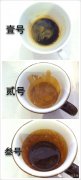
Does the state of Espresso oil affect the flower?
To make a perfect cup of coffee, you need delicate and highly blended foam! In addition, will the state of Espresso oil also affect coffee flowers? If so, what impact would that have?
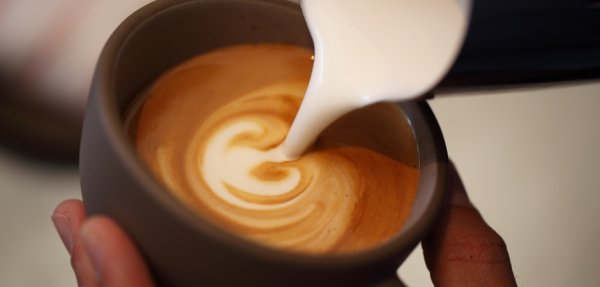
The influence of the state of Espresso oil on flower drawing "Coffee flower drawing art" Espresso
1. Comparing number 1 and number 2, we can see that the color contrast of the pattern of number 2 is higher than that of number 1, and the stripes of the pattern of number 2 are much clearer than that of number 1; 2. Comparing number 2 and number 3, we can see that the color contrast of the pattern of number 3 is similar to that of number 2, and the stripes of the pattern of number 3 are slightly clearer than that of number 2. We have come to the conclusion of coffee experiment: through the inspection of actual operation
Detailed introduction of the concentration of Espresso
When you talk about concentration (strength), you may be talking about one of the following three things: flavor strength, texture, weight or viscosity, the concentration of soluble flavor substances in coffee, which often appear in the same sentence. To avoid confusion, I define it here as follows: when I use concentration (strength), I use concentration and light to express the concentration of coffee soluble flavor substances, or TDS (all

Coffee knowledge, Espresso oil status on the impact of flower pull
To make a perfect cup of coffee, you need delicate and highly blended milk foam! In addition, will the state of Espresso oil also affect coffee flowers? If so, what impact would that have? We did the following coffee experiments: as shown in the figure below, there are three groups of Espresso: No. 1 Espresso is placed more than two minutes after normal production, fat

Italian coffee production introduction: coffee knowledge Espresso oil status has an impact on the pull flower
To make a perfect cup of coffee, you need delicate and highly blended milk foam! In addition, will the state of Espresso oil also affect coffee flowers? If so, what impact would that have? We did the following coffee experiments: as shown in the figure below, there are three groups of Espresso: No. 1 Espresso is placed more than two minutes after normal production, fat

Introduction to Ethiopian Sidamo Coffee beans with floral flavor
The taste of Sidama in the sun is close to the smell of flowers, but it is about a little earthy. Water washing has a nutty fruit aroma with a slight cocoa aroma, but what the two have in common is smooth taste and viscosity, comfortable and pleasant acidity and fragrance. Light or medium roasting is suitable for individual products, medium or deep roasting is suitable for blending coffee and good Espresso base Sidamo coffee raw beans are grayish and in some places thick
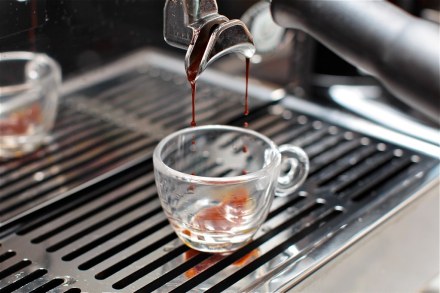
The fat of Espresso seems simple, but it is worth studying!
Many friends who are using coffee utensils other than Italian machines always struggle with the fact that their coffee is free of oil. Only coffee made by Italian machine has fat?! Why does the mocha pot have so little espresso oil?! What kind of grease can be regarded as the perfect Espressofan! If we want to talk about grease, let's look at it from these two aspects. First of all, let's take a look at a cup of black coffee except water.

Perfect Italian concentration starts with grease. How to do Italian concentration?
Professional coffee knowledge exchange more coffee bean information Please pay attention to the coffee workshop (Wechat official account cafe_style) oil thickness generally has a lot to do with the freshness of beans, too fresh beans, the extracted oil will be very thick, but also quickly dissipate, such oil we think is too rough, so bean cultivation plays an irreplaceable role in the formation of oil

Italian Coffee-espresso all-round Learning
The birth time of Espresso is around 1946; and this year is regarded as the official birth year of espresso. Since then, this unique coffee drink has been popular in Italy, Spain, Portugal and other southern European countries. But it wasn't until around 1986 that espresso was introduced around the world by Starbucks. Since then, people in the coffee industry around the world began to know and understand this kind of coffee.

Ethiopian coffee producing area
Following caf é (Wechat official account vdailycom) found that Beautiful Cafe opened a small shop of its own Ethiopian Coffee producing area has three well-known producing areas in Ethiopia, Harald (Harar), Yiragcheffe (Yega Xuefei) and Sidamo (Sidamo). Sidamo is located in the highlands of southern Ethiopia and adjacent to Kenya.

Italian Coffee espresso Comprehensive Learning
The birth time of Espresso is around 1946; and this year is regarded as the official birth year of espresso. Since then, this unique coffee drink has been popular in Italy, Spain, Portugal and other southern European countries. But it wasn't until around 1986 that espresso was introduced around the world by Starbucks. Since then, people in the coffee industry around the world began to know and understand this kind of coffee.
How to appreciate Italian espresso coffee
The birth time of Espresso is around 1946; and this year is regarded as the official birth year of espresso. Since then, this unique coffee drink has been popular in Italy, Spain, Portugal and other southern European countries. But it wasn't until around 1986 that espresso was introduced around the world by Starbucks. Since then, people in the coffee industry around the world began to know and understand this kind of coffee.

Comprehensive Learning Evaluation of Italian espresso espresso
The birth time of Espresso is around 1946; and this year is regarded as the official birth year of espresso. Since then, this unique coffee drink has been popular in Italy, Spain, Portugal and other southern European countries. But it wasn't until around 1986 that espresso was introduced around the world by Starbucks. Since then, people in the coffee industry around the world began to know and understand this kind of coffee.

You may not know this about Ethiopian coffee.
Ethiopia is known as the birthplace of coffee. There is such a custom in Ethiopia. No matter how poor people are, they must have a coffee pot and a charcoal stove. Why? Because the local people think that coffee is what they have to make every day, because they think chemical fertilizer is very expensive, so they never use chemical fertilizer. Then this coffee is brewed.
Ethiopia coffee production area profile Ethiopia West Dharma
Harar/Sundried/Dry-Processed Harar is located in the Eastern Highlands of Ethiopia (Haredge Province) and grows at an altitude of 5,000 - 7,000 feet. It was still wild on hillsides a century ago. Most raw beans are medium in size and pointed at both ends. The color is green with yellow or gold. When baked, it has a strong chocolate smell.

Brief introduction of main producing areas of Ethiopian Coffee
Hara (Harar) / Solar or dried (Sundried/Dry-Processed) Hara is located in the Eastern Highlands of Ethiopia (Harerge Province) and grows between 5000 and 7000 feet above sea level. It was still wild on slopes a century ago. Most of the raw beans are medium size and have long tips at both ends, with a yellowish or golden green color and strong chocolate when baking.
A brief introduction to the main producing areas of delicious Ethiopian coffee
Hara (Harar) / Solar or dried (Sundried/Dry-Processed) Hara is located in the Eastern Highlands of Ethiopia (Harerge Province) and grows between 5000 and 7000 feet above sea level. It was still wild on slopes a century ago. Most of the raw beans are medium size and have long tips at both ends, with a yellowish or golden green color and strong chocolate when baking.
A brief introduction to the main producing areas of coffee beans in Ethiopia
Hara (Harar) / Solar or dried (Sundried/Dry-Processed) Hara is located in the Eastern Highlands of Ethiopia (Harerge Province) and grows between 5000 and 7000 feet above sea level. It was still wild on slopes a century ago. Most of the raw beans are medium size and have long tips at both ends, with a yellowish or golden green color and strong chocolate when baking.

Brief introduction of main producing areas of Sidamo Coffee Bean
Following caf é (Wechat official account vdailycom) found that Beautiful Cafe opened a small shop of its own Sidamo Coffee Bean production area profile: Hara (Harar) / Solar or dried (Sundried/Dry-Processed) Hara is located in the Eastern Highlands of Ethiopia (Harerge Province) and grows between 5000 and 7000 feet above sea level. It was still wild on the slopes and raw beans a century ago.